Service
Bathroom Renovation
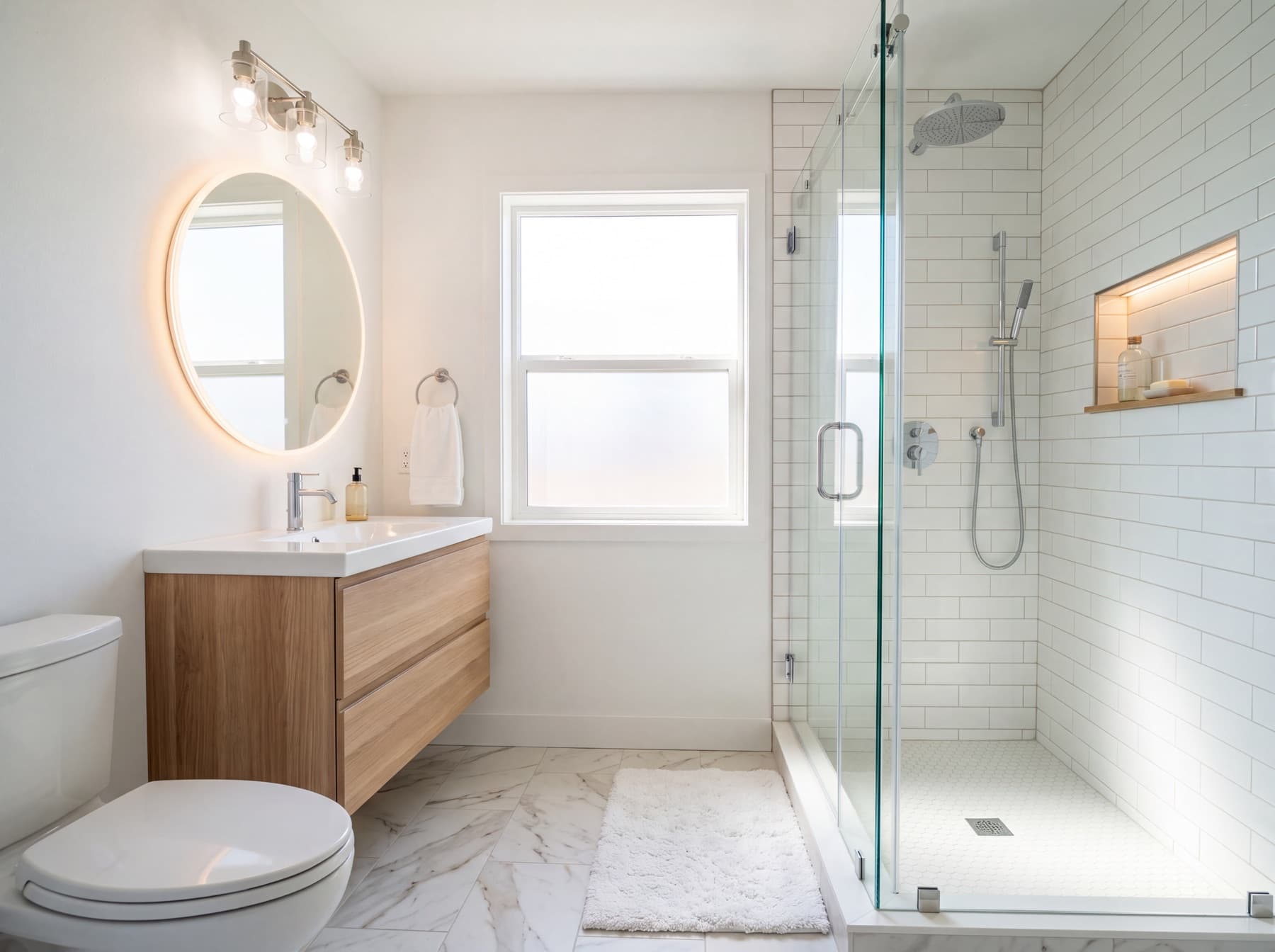
Smaller-scope bathroom renovation for homes that need an update, not a full teardown — walk-in shower conversions, new flooring, fixture and vanity swaps, or a lighting refresh.
A bathroom that looks dated doesn't automatically need a full remodel. If the layout already works and the plumbing is sound, a renovation — new tile, a tub-to-shower swap, updated fixtures — delivers most of the visible and functional upgrade without the multi-week schedule or five-figure budget a full remodel calls for.
How Long Does a Bathroom Renovation Take?
A focused project like a tub-to-shower conversion typically takes 1 to 2 weeks start to finish, with the actual on-site installation — once materials have arrived — done in 2 to 5 working days. That's a fraction of the 6-to-10-week timeline a full remodel needs, because the plumbing rough-in and floor plan stay exactly where they are.
Most of that window is spent waiting, not building. Shower systems, glass panels, and tile are typically custom-cut for the specific bathroom, and that lead time runs 1 to 2 weeks before installation can even begin. Once a crew is on site, the sequence is fairly consistent:
- Demolition of the existing tub and surrounding wall material.
- Inspection of the subfloor and framing — old tubs are a common spot for slow leaks that haven't shown up yet.
- Plumbing adjustments to reposition drain and supply lines for the new shower base.
- Waterproofing and installation of the shower base, wall system or tile, glass, and fixtures.
- Finishing — grout, caulk, hardware, final walkthrough.
Key takeaway
Budget 1 to 2 weeks total for a standard tub-to-shower conversion, most of it spent on custom-ordered materials rather than construction itself. Glass enclosures, built-in seating, accessibility features, or plumbing issues found mid-project all add time — worth asking about upfront rather than after demo starts.
Custom features are the main thing that stretches a renovation past the typical window. A frameless glass enclosure, a built-in bench, curbless-entry accessibility work, or relocating a drain each add real time — either the parts are made to order, or the labor itself is more involved. The other frequent source of delay isn't the plan at all — it's what turns up once the old tub is out. Older homes especially tend to reveal plumbing issues or hidden water damage behind the tub surround that weren't part of the original scope.
What Does It Cost to Retile a Bathroom?
A full retile covering both floor and walls typically runs $3,000 to $12,000. For a small bathroom specifically, expect $3,500 to $5,500, including demolition, disposal, and a new waterproofing membrane.
Floors and showers get priced separately, and the difference is significant:
- Floor only — for a standard 5-by-8-foot bathroom (roughly 40 sq ft), figure $120 to $2,100 depending on tile choice.
- Shower only — running $8 to $40 per square foot, or about $800 to $3,000 for a typical shower. A large walk-in with premium tile, an accent pattern, or a built-in niche can reach $10,000.
Showers run more per square foot than floors for a straightforward reason: vertical tile work takes longer to install correctly, and waterproofing behind shower walls has to be right the first time — a failure there causes damage inside the wall cavity that isn't visible until it's already extensive.
What actually moves the number:
- Tile size and material. Large-format tile installs faster per square foot, though premium porcelain or natural stone costs more per unit.
- Pattern complexity. A herringbone or chevron layout takes meaningfully more labor than a straight grid, and that shows up directly in the quote.
- Add-ons. A built-in shampoo niche, bench, or accent tile band each adds labor and material beyond the base square footage.
- Condition underneath. If the substrate needs repair or the old waterproofing needs replacing — common in older Triad-area homes — that's genuine added cost, not something a reasonable contractor should skip to land a lower number.
For a bathroom where the vanity, toilet, and plumbing are all fine and only the tile looks tired, retiling on its own is one of the more cost-effective ways to make the whole room feel new.
Renovation or Full Remodel?
The dividing line is whether the layout changes, not how much visible work happens. If the toilet, sink, and shower or tub all stay put — and the project is tile, fixtures, a vanity swap, paint, or a tub-to-shower conversion — that's a renovation, realistically finished in one to two weeks without opening up the plumbing. If fixtures need to move, the footprint is expanding, or the room is being reconfigured, that's a remodel, and it needs the longer schedule and larger budget that comes with new plumbing runs and permitting.
A useful way to sort it: a renovation improves what's already there; a remodel changes what's there. A bathroom that's just cosmetically dated — old tile, a tired vanity, a tub nobody uses — is usually a solid renovation candidate. A bathroom with a genuinely awkward layout, not enough storage, or plumbing that's failing regardless of finishes usually needs the full remodel to fix the actual problem rather than just cover it up.
Where We Offer Bathroom Renovation
What Homeowners Look For
A few things customers consistently tell us matter most.
Frequently Asked Questions
Ready to get this fixed?
Call now or request a free estimate — we'll get back to you fast.